
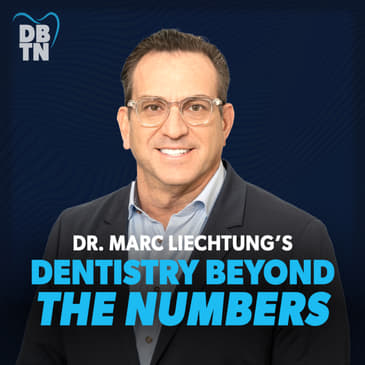
In this episode of Dentistry Beyond the Numbers Dr. Marc Liechtung dives into exploring exit strategies for dentists across different age brackets—forties, fifties, and sixties.
Forties: Discusses the entrepreneurial itch and considerations for entering corporate dentistry to maximize business value.
Fifties: Highlights opportunities for established dentists, exploring options like DSOs and DPOs, and the financial benefits of selling and staying.
Sixties: Explores retirement planning, managing economic pressures, and the importance of preparing early for a successful exit.
Dr. Liechtung draws from personal experiences and encounters with leading dental professionals, emphasizing the diverse pathways dentists can take in their career trajectories.
Business Inquiries: mliechtung@gmail.com
[00:00:00] But today, one of my favorite topics. It has to be on everyone's mind. It's called Exit. Exit. Exit and Exit. Exit doesn't mean exiting dentistry. It doesn't mean exiting my practice. It just means what is my exit strategy? What do I want it to be? How can I cash out in the biggest payday that I could get from my business or practices? And let's put the biggest calculation in. How old am I? So I'm going to break it down today between the 40s, the 50s, and the 60s.
[00:00:27] Hello everybody. My name is Dr. Marc Liechtung and we're doing another Dentistry Beyond the Numbers. And I got to thank all of you out there. We are growing. And I don't know if it's the topics, your board, or maybe you hear something you like. But thank you so much for really every episode we're growing. Every episode I get great reviews from you guys and really ask questions. Please feel free to tell me anything.
[00:01:01] I want to learn, but I want to bring you knowledge. And that's what I'm trying to do. Whether it be something I know, I've got to find out. There's so much in dentistry. But please don't hesitate to like me on any platform you find me and comment to me if you want to speak about something. If you want to hear about something.
[00:01:19] We're going to talk about some great, great opportunities or great, great future episodes that are coming with really what I call the creators of greatness in dentistry. I'm putting in front of you some exciting dentists that are adding to the profession every day and we have to thank them. And I want you to listen to find out about them.
[00:01:40] I've you know through my travels of snap on and some corporate dentistry and owning some practices and lecturing. I met some really unbelievable people, some people unfortunately are no longer with us. But some people are unbelievable. And, you know, I can tell you that there was a guy named Bob Ipsen may rest in peace.
[00:02:00] And a lot of us know that name from Denmark and the lumineers. Now for dentists in California didn't create lumineers, we wouldn't understand the prepless veneer. But there's a whole history of that. And I want to bring it to you slowly because that's how we do it here in dentistry beyond the numbers.
[00:02:17] But today, it's one of my favorite topics. It really is because it has to be on everyone's mind. It's called exit, exit, exit and exit. Exit doesn't mean exiting dentistry. It doesn't mean exiting my practice. It just means exits. What is my exit strategy? What do I want it to be? How can I cash out in the biggest payday that I could get from my business or practices?
[00:02:46] And let's put the biggest calculation is how old am I? So I want to break it down today between the 40s, the 50s and the 60s. And I'm not talking about years or the music, although they're great music, I'm sure. But I'm talking about the age of the dentist.
[00:03:03] Now, if the dentist is 40 years old, it's a different mindset, obviously, if they're 50 or 60. So we really can't talk about it in just a broad generic manner. But let's break down each age. Let's talk about hey, if I'm a 40 year old, which I've met so many of you and you know I've met a lot of you and you are unreal.
[00:03:25] Today's 40s are amazing. They come out with tremendous technology knowledge. They come out with great training. Some of them have gravitated to my comps up of being a super generalist with me or believe me without me, but they become awesome.
[00:03:41] But they get the itch. It's called the entrepreneurial itch. I've done this, I've created a three and a half, four million dollar practice. I've got an EBIT of a million dollars plus. I'm making money. I'm driving a beautiful car. I've got a beautiful family. My wife is so proud of me.
[00:04:00] But me, am I going to do this for the next 20 years? Do I want to excel and get out? So at 40, many, many people see the gravitation of organized dentistry. Because where is the money in dentistry? It's with organized dentistry. Who could I get the biggest payday for my practice? It's with corporate dentistry. Right? It's with larger groups. I go to a private doctor. He's giving me a percentage of gross.
[00:04:19] So if I'm a 40 year old something doctor and I am buttoned up, I know my business. I have a couple of associates the practice doing close to four million dollars. I have thoughts of expanding and growing into eight to 10, which I've seen guys do. And in their 50s, they're riding the wheel.
[00:04:35] Looking phenomenal, choosing whatever direction they want. But somebody has a bigger rich at 40. He doesn't believe that the township, the town, his own knowledge, and gumption and desire can handle that. Or he just wants to expand. He wants to grow. He wants to be a better doctor.
[00:04:51] He looks for that five to six and multiple today. It's not that eight to nine million multiple anymore. Times have changed. I'm bringing in this exit, exit, exit because people are saying I want to end. I want to get out of the way. I want to get out of the way.
[00:05:06] Look at the TV. Inflation means something. Interest rates are high. If a group buys you and some other group buys you, you're going to have to pay the price. And that's the way it works.
[00:05:20] I want to end. But corporate dentistry is not giving me what they gave some other guys 12, 18 months ago. Look at the TV. Inflation means something. Interest rates are high. If a group buys you and spends six and a half, seven percent on their money and same store growth in average, that means practices post close.
[00:05:44] I'm a 40 year old. I'm looking at everything, but corporate is saying if you're only grown three and a half four percent, I'm paying seven percent. Does it make sense to go out and buy these practices? We're almost losing money if you can follow that.
[00:05:59] If you're a 40 year old, that person is looking to gravitate to that corporate side of dentistry. Or are they? Or maybe they're 40 year old something. Young kids. That year, that was age high 30s, low 40s. You've got so much.
[00:06:16] Get up and go. And your children are ending preschool, day school, maybe pregnant, maybe not born. My point is it's a time that doctors are saying honey or I'm alone and I want to change my outlook.
[00:06:33] I want to make money. I want to try something different. And that is the beauty, the beauty of dentistry. I keep saying how lucky we are to have a profession that we have options in every which way they do.
[00:06:48] You know, you could go private owner partner or sell it to a corporate side. Why would I sell it to a corporate side? Maybe you feel the revenue is down. Maybe the pandemic set in and it really destroyed your desire to run a business.
[00:07:05] People are different today and all the time people are different. Some people don't want what some of us wanted. They don't want to build a big practice. They don't want to build a big business. They want to enjoy their life.
[00:07:19] Either religious reasons, personal reasons, hobby reasons, family reasons. They don't want to take on the world.
[00:07:26] Remember, coasters, roasters and rainmakers, even the purchase of a practice, a coaster would say wow, five million dollars. And I could stay here and work. And here's the key that I'm going to bring on for every age.
[00:07:42] I could stay here and work and still produce a million and a half dollars, take home a half a million, pay my bills and pocket that five million or whatever I pull out. What a great move. A roaster, man he's moving. And the rainmakers they see the vision.
[00:08:02] They're saying let me roll some money. Let me be part of corporate dentistry. Maybe I could be a clinical leader. I'm young, but here's the third thing when you're in your 40s. You could do it again and again.
[00:08:19] And what I did when I was in my 40s not understanding corporate side I always loved doing dentistry, but having a business that was generating revenue for me somewhere else. Having a manager and overseeing and discussing dentistry with people.
[00:08:34] So what you really could do at that stage is you sell, you stay on. And I'm going to tell you if you sell and stay on at the age of 42, you work for three to five years before you know 47 you pocketed that six to seven multiple.
[00:08:50] Now you're making six, seven million dollars because you're a little more aggressive. You want six times or six and a half times you're not going to take less.
[00:08:59] You got you a lot of things taken care of and at 4647 you saw how to run a business. You saw how to grow a group, and you want another bite at it. It's a great opportunity.
[00:09:10] You got away the landscape. Everybody is different. Children, how old where what, but the opportunity in your 40s. Once you've built that practice once you see that is really vast.
[00:09:26] And dentistry beyond the numbers is open for anybody with a question during this period or after. So please don't hesitate because this is a major, major opportunity for your family, something that you could be selling some of you and some of us, the largest asset we have in the 50s.
[00:09:48] It's a little different. The dentist has become a superstar and I'm talking everybody about. I'm talking about what we aspire to be great super generalists running our business. I'm in my 50s, and I say, I've established a great organization.
[00:10:08] I've got a marketing person. I've got two or three practices or one very beautiful one that throws off revenue all the time. I've got a couple of million of breath of EBITDA. But I feel that I feel that there is an opportunity out there.
[00:10:26] There's an opportunity out there with either DSOs and DPOs and knocking on my door all the time. My friends have sold they made a lot of money.
[00:10:34] Now I'm in my 50s. I'd like to get out when before I'm 60. So I'll sell and I'll stay another five years. And again, even in your 50s, if you're doing 35% of what you produce, and you've got a $5 million practice because you produce about a million, 82 million.
[00:10:53] Well, you're going to be making six seven eight hundred thousand dollars a year. And that pays your bills and the six million seven million dollars that you put in your pocket that stays as a beautiful nest egg.
[00:11:05] What a great exit. What a great exit for a 50 year old because at 53 54 you're done at 58 59. You go whatever you want. You got money in the bank. You've established you've accumulated money.
[00:11:19] You're set to go. Let's go to the entrepreneurial side. The coaster and Roaster and Rainmaker. Let's go to the Rainmaker. What is the Rainmaker thinking right now? He's saying I'm 50 years old.
[00:11:31] I pocketed a lot of money. I've got a great business. They want to give me six and a half times of what I'm doing at 1.82 million of EBITDA.
[00:11:42] I get 13 14 million dollars got no debt and they'll keep me. But more than keep me there giving me an opportunity to run a clinical opportunity to help run this business.
[00:11:56] And at 53 that's exactly what I'm looking for. And at 56 57 I'll have an opportunity if I want and I love what I do to do it again and to sell another one or to just caddy up and grow another one as the chief clinical officer or just a great mentor to young docs.
[00:12:18] The opportunities are there but in your 50s that's the time in my opinion you need to assess where you're going. I don't want to hear it. I'm just gonna I'm making a lot of money. My family is great. I'm great.
[00:12:32] Great. But today and any day we should be careful because our families taken care of we provide a great insurance.
[00:12:43] What we owe it to ourselves to see the landscape. I'm a big believer in cash is king. I'm a big believer in you never got really there's a saying you never got pregnant from a meeting. You know you go to a meeting you talk you hear what they have to say.
[00:12:56] There's no damage and today's talks could be outlandish. I mean I remember when I took a lunch it was a changer. I've took I've taken a couple of those lunches. I was lucky enough to sell a few groups and I'll tell you it's an exciting time for you for dentists in their 50s.
[00:13:13] Who have such respect and organization that people respect. Quality of dentistry they want to mentor they want to show people how to do super generalist dentistry every group in this country is looking for those.
[00:13:27] So at your 50s you know you could sell and stay. You could sell and give them a certain limit or you could sell and tell them I'm ready to grow and I've got friends that will come on and I want to be part of it.
[00:13:42] Again some people say to me you know I just want to build up my I want to continue to lecture more and I want to do dentistry. But that's the beauty of it. You could still produce 35 percent pocket money and teach and lecture or grow and mentor.
[00:14:01] This is a personal question.
[00:14:05] But the question you have to ask is not when you're unfortunately 60 65. It's when you're 52 54 because you want to get the best dollar and unfortunately in our field and what I've heard and learned is that the age of 60 62 even though some of us are in really think I'm in really good shape.
[00:14:26] I know a lot of my friends are really good shape. They play a lot of golf they exercise out. But it is an age that in the age of 60s it's exit exit exit. It's on every doctor in their 60s mind on how do I have it and I find there's a big knee jerk reaction in it.
[00:14:46] Doctors wake up on a Monday and they call Mark can you call me and they want to talk about it today. We got the doctor wants to talk this doctor is ready. Monday's a great day for that by Wednesday they had a good day in mail to produce a couple of big cases and they're rethinking the decision to talk.
[00:15:06] And it's a cycle.
[00:15:08] But in your 60s you don't have that luxury. The clock is ticking groups are not knocking on your door as much unless we talked about it in development of the dental cancer, unless that doctor has developed a real great mentor program, associate chip, great hygiene, and it's working, and it's working.
[00:15:32] And if the doctor sells, let's say it's a five, a $4 million practice. Doctor does a million stays on.
[00:15:41] But at least the doctors not doing three nine, and if the doctor is doing three nine of the four and we know what that means right we're big producers that doctor needs to look at the landscape over the next year or two and think, if I pare down if I get some associate to really kick, kick butt.
[00:15:58] Is that going to change at this stage. It's a question. I don't know how old you are, but as we get older doctors are values of our practices do go down.
[00:16:10] Because we the great producers are just by nature by age, not as vibrant and not going to run two three rooms like we did when we were 40.
[00:16:22] That's why a person in their 40s who wants to go corporate and grow a big business. They have an opportunity to grow that business. And they could stay on longer but more importantly the groups want them more.
[00:16:35] You come in at a 45 year old doctor that group can look at you and say that's a chief clinical officer in the makings when they're 5052.
[00:16:43] And we can grow another piece of it, or leave it for the people that buy out or recapitalize that business. It's just another bonus that gives you the, the corporate entities and other level of that they want to get involved. And we in our 60s.
[00:17:02] You know, we live through the pandemics we live through the Sandy's we live through the floods and the wars and it causes more pressure on us. And what causes more precious pressure on us I'm fine I found by looking at so many officers is our staff.
[00:17:19] The team that we loved are starting to think that this doctor has to be selling he's getting or she's getting older. They have to sell, what are they going to do with me. They may start looking.
[00:17:31] They may start running. It's a very much of a quandary. What do I do doc. Oh, what an opportunity we have. Because if I'm 64 and I don't want to sell the corporate. But I have a son as I do is a third year student.
[00:17:49] I have an annuity for the rest of my life. Rather than sell, you have the opportunity to practice with your child.
[00:17:57] And over time, if that child has so inclined to take over that practice that two $3 million practice or $4 million practice can be sold to your child as an annuity on a monthly basis. Your child didn't take out a debt, didn't take out a loan.
[00:18:14] They'll pay you forward for almost the rest of your life. And that's a great way to retire. So having the asset is amazing. It's just amazing because there are so many avenues.
[00:18:30] If you have a family member and associates that could come in with a manager that you have oversee the practice when you decide to cut back debt. Day after day after day, those associates are still producing great dentistry under you.
[00:18:46] Those associates are still developing great EBITDA because of you and your manager and your organization that you've had for 25 years.
[00:18:54] So this is something we really need to look at right you your financial person, maybe your dental consultant, but you really need to look how many years you want to go. Are you healthy? If you're healthy, keep going if you love it.
[00:19:05] If you want to scale back, you have different different avenues. Someone should ask me and I'll ask it. Why did I choose corporate? I mean, which way did I go?
[00:19:14] You know, my first segue into corporate was really in a big way was I always years ago when I first got out, I like multiple practices. I liked having the action. I like doctors talking dentistry.
[00:19:27] I like obviously growing practices because it throws off profit usually and we could make more money. But it also allowed me to really feel like dentistry was a great profession and it solved the need for me to be a businessman.
[00:19:41] And I loved it. And I do love it. But as we grew, you know, sometimes I felt like maybe I'm not smart enough to run a multiple practice group. And at many times I sold a few times. That was one of the reasons I sold.
[00:19:54] Didn't love the practices. Didn't love the fact that maybe I reached the ceiling in these practices or I've reached the ceiling building these practices.
[00:20:04] And that's why I say if you join a group, you would have such a great opportunity to learn so much even going through the process, even signing that letter of intent or going through the process of hearing.
[00:20:18] You can substitute what I do and tell you things you can substitute that for going through the process. Now, of course, it's expensive. You got to hire an attorney. So if you're serious, it's not a bad thing to go through and learn.
[00:20:30] If you get your numbers and it's amazing, well, then you can go through with it. But if you don't, well, then you know what you're doing the next time. So a little bit about the 40s, 50s and 60s.
[00:20:41] And to summarize that is really important that you get it. You get the 40s and the 40s. Your world is an oyster and you open it up and it's just amazing. You could go in many different directions, but don't sit tight.
[00:20:55] Don't sit back. Learn what your options are. The world has changed in the last year for dentistry. It's going to get a little bit more interesting how we navigate. And I'm going to get into that in a minute. But in your 40s, don't discard that I'm 40.
[00:21:11] Look at what your opportunities are, especially if you're in your life of thinking about moving, changing, you know, growing or or whatever you want to do. But definitely look into it in your 50s. I urge you to look into it.
[00:21:25] The 60s come around very quick and we don't know what the economic value is.
[00:21:29] If you need to wait a few years till the interest rates go back down or you have somebody on your radar that's going to give you a great offer as soon as they're ready, it's not a bad way to be.
[00:21:40] But at least again, from a standpoint of knowledge, maybe you've had a bad month. I mean, you know, for all of us, we have a bad day, a bad week, a bad month.
[00:21:49] We start thinking what our options then you have a great month and you think about how do we grow the practice? So if you're serious about that, you should look into it. Speak to a consultant. Speak to a lawyer. You speak to a group that's floating around.
[00:22:03] You can call me and I can advise. Right. You can ask me and I can give you some great ideas. I'm not going to sit here and tell you one group over the other. Every group gives you great opportunities. Maybe you're a teacher instructor.
[00:22:16] You want to do that for your own your own DSO or DPO. So you want to be absorbed, but be an instructor in the group. It's a great way. Got a lot of doctors doing that.
[00:22:25] If you've been an instructor in a lecture and you want to keep doing it, it's phenomenal. It's called mentorship and giving back. But in our 60s, I urge you. I urge you, Docs, prepare. Get to know what you need to do.
[00:22:39] Try not to leave money on the table if you can't help it. But don't be discouraged if the groups discourage you. You have many opportunities. So just just remember, the asset is the important factor.
[00:22:52] Your goodwill that you left on that practice is what is the key asset and ingredient and who you bring on to succeed you in the next level, whether it be corporate, whether it be personal, whether it be another buyer.
[00:23:08] That succession plan opens the doors for all these buyers. You know, if you're a high end guy or gal and you, you know, you're you're a woman who really practices a high level cosmetic dentistry.
[00:23:20] You're going to be somebody who or a man who does some great implant cases as we discussed the doc who does it hard to replace that start a little earlier. But if you come to the group already replaced, your value goes up.
[00:23:34] Who don't want to be asked here. I am. I'm 68 years old. I'm ready to sell. I need an associate. No, I'm sorry, but that's not what we do. So these are the options. These are the thoughts.
[00:23:45] But what what is going on today? You know, everybody's talking about the groups and how they are in this. I don't know about you anybody out there, but I can tell you being in a group and I'm part of Guardian Dentistry Partners that
[00:24:00] And I've seen so many guys come and gals come into Guardian and really be happy in the decision they make. And along the way, some need to be tweaked. But I don't have anyone calling me and saying, oh, my God, I got to get out.
[00:24:15] So it just seems like the decision that's thought out and made is the right decision. Now, today, the groups are different and I'm not going by our group. I'm going by all groups have changed their model because of the interest rates. The interest rates have gone very high.
[00:24:33] And as I alluded to before, businesses are not going to be bought as frequent. And if they are, those are the officers that are being bought for seven, eight multiple. I mean, they're either exceptional officers or I think the groups are making a mistake right now.
[00:24:48] And I agree with it. I would love for us to be buying things that eight multiples, but it's it's just not smart. It's not smart because the practices, you know, with the interest rates high, people may not be doing as much care credit.
[00:25:02] People must not be doing as much other third party payments. Right. They may not go for that clear line of case. Can I get a denture instead and all on four and wait six months? That is the factor of what's going on. Right.
[00:25:14] People can push off instead of doing three hundred thousand a month. Maybe you're doing two sixty. It's a big difference. We need to annualize it over the year. I want to give you a little history. Right.
[00:25:23] So we know that in my opinion, I really condensed the forties, fifties and sixties. And it's because, you know, you wake up if you're a fifty five year old, just just start looking into it. I mean, you owe it to your family. You owe it to yourself.
[00:25:39] If you're in your 60s and 65, get off the goddamn seat and start seeing what your options are. But the groups have changed their model. The groups used to be I remember they would buy dots on a wall.
[00:25:53] You come in and go, your group, how many dots you have? I've got one hundred and fifty two practices. Really. Where are they? We've got five in rural, you know, in the in the outer banks of North Carolina where it's really hard to get to.
[00:26:05] But they get about six patients a day, four new patients a month. And that's not that's not a good practice.
[00:26:13] I remember we once I was I was with the group that bought my group at that time and we had a meeting and they were talking about buying this other group.
[00:26:21] And they showed me the group. And most of the seven practices were open two, three days a week. I go, what are we buying? I mean, this practice, but it's it's stores. It's literal locations. That's gone. You can come with a hundred spots on a map. You're gone.
[00:26:37] What's today? Well, then it became gross revenue. Oh, I'm not looking at anything under a million dollars or seven hundred thousand dollar gross, which was great for the guys that were buying things in the six to seven range or eight range because the groups were never touching us.
[00:26:53] So it was just the private buyer and the groups were hanging in the grosses of one point two, one point five. They wanted the higher grosses. But then it all changed. It's like one day somebody walked in with that word.
[00:27:08] Even the doctor of even to me, it just happened. You look up one day and they go, what's your even what's your even what's even right group said certain areas. I mean, you know, you go to rural areas that you're building a group.
[00:27:24] You buy something for four hundred thousand dollars. You buy something that's doing a million, million to but in great as the group grows, the demands grow. So we we said let's buy grew a practice that doesn't have less than eight hundred to a million of EBITDA profit.
[00:27:42] The doctor is making a lot of money. That doesn't mean and we're going to get into this down the road. I don't want to get into that. But that doesn't mean the doctor is worth that much money. And it's unbelievable. But they did the multiple of EBITDA.
[00:27:55] So now the group saw if they buy a million to a view, but on the by for seven X and they pay eight or nine million dollars. Doctors happy. Doctors stays. We're going we're growing. That's great. But then the interest rates went up. Everything stopped.
[00:28:10] People call me and say, Doc, what's my deal? And I felt terrible. I want to know. I feel terrible for some practices because we we have to do that Irish goodbye. We just had to say we're sorry. You know, it's not our fault.
[00:28:22] Look at the news. Read. Watch the news. Watch the business channel. Read the journal. It's the interest rates. Stupid. And that's it. It's the economy and there's nothing these guys are going to do.
[00:28:34] They're so disciplined. They like that shiny thing in the window, but they are disciplined not to buy it. And we had to become disciplined. But I'll tell you what's going to happen in the near future.
[00:28:45] I believe, you know, I think the groups may be thinking going back to the original opportunities with their operational team, with the money they could spend on marketing, with the money, the way they can bring in new patients.
[00:28:59] I think groups and smart ones are noticing. Why don't we buy? It's called the like tongue method because nobody else is here so I can call it whatever I want. Right. The method by low build high.
[00:29:12] So now the groups are going to be buying eight thought eight, nine hundred thousand dollar practices, seven hundred thousand dollar practice room for six, eight chairs. They're utilizing three. They renovate the office.
[00:29:25] They buy it for a half a million dollars and now they build the business market the heck out of it. But they're not spending six, seven million dollars of it.
[00:29:33] Maybe the EBITDA is 200. They buy it for 800,000, 750,000, four times, three times, four times and a million at the most, but less. And the doctor has no choice. The doctor stays on a year or two and leaves.
[00:29:50] It opens up the doors to the 60 year olds because that's exactly what they want. So I think this is an incredible theory because it just seems to me like I sit and I look at the industry and I'm saying to myself, I think it's coming full circle.
[00:30:07] I think what's happening in the next six months to a year is the doctors that are doing. I'm not saying if you're doing two and a half million dollars, you start tanking it.
[00:30:16] I'm not saying that. I'm saying that if you're stuck at that seven, eight hundred thousand dollar mark, there's going to be the cavalry is coming.
[00:30:24] There might be some help down the road. What I also noticed and I'm very big on this and that's one of the things I really enjoy about Guardian is that the clinical aspect is as important as the financial structure.
[00:30:36] And I'll say that again, the clinical aspect is as important as the financial makeup of the business. Because when I sold or bought practices back, let's say in the early 2000s, the late 1990s, I mean, it was 20 years ago.
[00:30:49] I was doing it and I got to say very few people came in and started looking at my x-rays. They did a check. Let me see five x-ray. But we look through things and we study things and we make sure that we are getting some quality dentistry.
[00:31:07] So you can think business all you want, but I am telling you, if you're not driven by quality, some group is going to say they don't want to deal with it. So it all has to stay in. It's a big multifactor equation.
[00:31:21] But the beauty is there's an answer. There's an answer. And I think the answers are multiple, but I do think there are multiple great opportunities. You just have to pick what's best for you and your family. But the industry is changing, everybody.
[00:31:38] It changes. It's a very fluid situation. And we as clinicians and we as mentors and leaders in our field, we have to be up on the change. The change could be, you know, you may be you want to get out. You want to sell your practice.
[00:31:53] You sell it for a 4x. Okay. Still making just one thing. Three million dollars. A three point two million dollars years ago. Years ago would have given me a percentage of gross. Think about this last equation for all you 40 year olds out there and everyone.
[00:32:14] But think about it. I used the three and a half million dollars with the 40 year old. So let's take it. Three point five million dollar practice throws off a million dollars of EBITDA working profit, operational profit.
[00:32:26] You'll get five point five six times that six million dollars for your practice. That's doing three million or three point two million, three and a half million. So you'll make six million dollars years ago.
[00:32:36] That three and a half million dollars would fetch you two point nine three point one. It would never come close to what you can get today. And that's what the multiples down. So let's not be discouraged. Let's be optimistic. Let's pray for a better economy. Our health.
[00:32:54] And let's remember we picked up phenomenal profession that gives us tremendous opportunities, whether in our 40s, 50s or 60s. But the hourglass back then in your 60s early 70s, it's ticking for dentistry.
[00:33:08] You may have to think of an end that doesn't that doesn't involve a sale, but there are still many opportunities. This was just a little insight today. I'm hearing a lot about exit exit exit.
[00:33:20] And I wanted to give you an idea of maybe when you're thinking back, good time of the year, the summer, you're on the beach reading a book, listen to some music and you're saying, do I really want to go another two, three years? I mean, everyone's doing this.
[00:33:32] Maybe I should entertain this guy or this person or these gals or this whoever's calling me. I want to sit down here with that to say not a bad idea. I don't think it's a bad idea. I think listening is really important.
[00:33:48] And I know we're speaking a lot of different topics and I want to end by just telling you what's upcoming. We're going to start this. What I what I started at the beginning is this creators of dentistry, these great creators of dentistry.
[00:34:02] And what I mean by that is there really are just a ton of people in our industry that has elevated our industry to just give you a few of these that are coming up that we're going to start interviewing is is really, you know, some that have confirmed and others that we are asking.
[00:34:17] But you take a gentleman like Dr. Kim Cooch from Portland, Oregon, who I know a long time and Dr. Cooch is an amazing man who developed two phenomenal companies. CDM, you know, cosmetic dental materials. And now he's into the carries carries lesions.
[00:34:33] It's just mind boggling how this gentleman who has mentored and touched so many people out in the West Coast and across the country has has just really has given to the dental community. We have Dr. Dan Gurman coming on.
[00:34:47] Dr. Dan Gurman created and is now the head of OrthoBrain. We have Dr. Louis Malchmarka, who is lecturing as you can see has brought Botox to the fore of dentistry. We have some young doctors that have developed great, great businesses and they're not selling anything.
[00:35:06] They want to they want to they develop great businesses through digital dentistry, which lowers the cost as we talk about. And increases the quality of the profession.
[00:35:16] So I really believe Dr. Mark Faber up in New York, who has developed a multitude of practices, multi-location business, all in a lab that he's created that does digital dentistry. Phenomenal topics coming up. Phenomenal topics coming up.
[00:35:33] And I want to tell you that's going to be in a couple of weeks. We're going to kick it off. We're going to get the right date. We're going to send it out. We're going to let everyone know should happen in a couple of weeks.
[00:35:40] But this is what I want to do. I want to bring in knowledge. I want to bring your people that really can add to it. And you say, wow, that is great. I never knew this. I grew up with mentors. I mentor.
[00:35:52] I always say as we do, you learn from us. You learn from the best. Me nothing but the guys before me who created these companies and then us from learning and taking a try to take it to another level. And you share it with the rest.
[00:36:07] And that's what we're doing here in dentistry beyond the numbers. And I want to say thank you. This was action packed. I love this topic because it's more of a roadmap. Remember, I'm here dentistry beyond the numbers. Look for me. Tell me what you're thinking.
[00:36:20] I want to say thank you. You've been a great audience and I'll catch you next time. Remember like me or just just do something for me. And remember next time on dentistry beyond the numbers. Thank you very much everybody. I appreciate it so much.
[00:36:36] See you at the next episode. Thank you very much. Bye bye.